
Mastering the Cold Chain: Why Zebra Supplies Outperform in Sub-Zero Temps
Posted by The ZPS Store on Jan 25th 2026
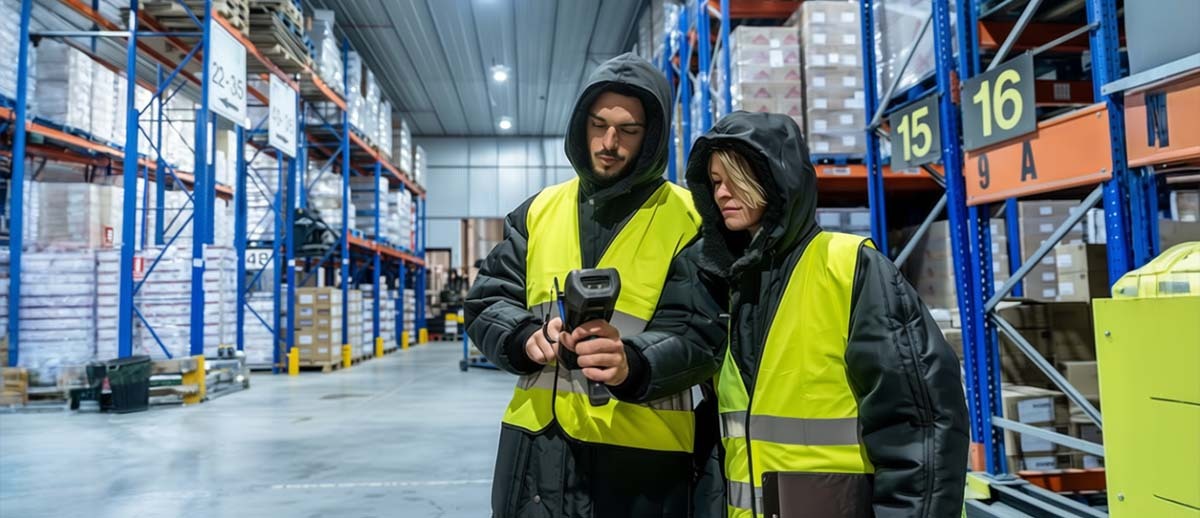
In the high-stakes world of the cold chain, a barcode label is never "just a sticker." Whether you are managing pharmaceutical biologicals, volatile chemicals, or industrial food storage, the label is the only thing connecting a physical asset to your Warehouse Management System (WMS).
When that label fails, the chain of custody breaks. At The ZPS Store, we exclusively provide genuine Zebra Printer Supplies because we’ve seen the "lost inventory" nightmare firsthand: thousands of dollars in product sitting in a sub-zero freezer, unidentified because generic labels are littering the floor. To solve this, you have to look past the surface and understand the molecular battle happening at -20°C and beyond.
The Chemistry of Failure: Why Standard Adhesives "Freeze"
Most people assume that if a label is sticky at room temperature, it will stay sticky in a freezer. In the world of polymer chemistry, this is a costly misconception. Standard economy labels typically use an acrylic-based adhesive. At room temperature, these adhesives are "viscoelastic," meaning they act like a very slow-moving liquid, flowing into the microscopic pores of the container to create a permanent bond.
However, every adhesive has a Glass Transition Temperature (Tg). When a standard label is introduced to sub-zero temperatures, it hits its Tg and undergoes a phase change. The adhesive loses its "flow" and becomes hard, brittle, and glassy—a process known as crystallization.
The bond snaps because the adhesive can no longer maintain its grip. The moment a container is moved, the frozen adhesive shatters like ice. This is exactly why Zebra invests millions in R&D to ensure their specialized freezer adhesives remain pliable long after generic brands have failed.
The Zebra Difference: Engineering for the Extreme
Because The ZPS Store focuses solely on Zebra products, we can dive deep into the specific material science that makes Zebra the industry leader in cold-chain reliability. Zebra doesn’t offer "one-size-fits-all" labels; they offer purpose-built solutions for every stage of the freeze.
- Cold-Applied vs. Cold-Stored: Know the Difference
There is a critical distinction that many buyers miss, and using the wrong Zebra part number for the wrong application can lead to failure.
-
- Cold-Stored: Applied at room temperature before being frozen. Zebra’s Z-Select 4000T All-Temp is an excellent choice here, featuring an adhesive designed to withstand the transition into the cold.
- Cold-Applied: Applied to a surface that is already frozen. This is where Zebra’s Z-Select 4000D Freezer shines. It features a specialized adhesive that "bites" through frost to bond directly to the frozen substrate.
- Synthetic Facestocks: Eliminating "Pulpy" Labels
Since paper is a natural fiber, it is the enemy of moisture. When a product moves from a deep freeze to a loading dock, "the bloom" (condensation) occurs instantly. Standard paper labels absorb this water, leading to smudged barcodes and torn facestocks.
Zebra’s synthetic label product line, including PolyPro 4000T and Z-Ultimate 3000T, is inherently hydrophobic. These labels repel moisture and oils, ensuring the thermal transfer print—when paired with the correct Zebra resin ribbon—remains crisp and scannable regardless of environmental shifts.

Beyond the Freezer: The World of Cryogenics
For laboratories and biotech firms, "cold" can mean the extreme depths of liquid nitrogen storage at -196°C. At these temperatures, even standard freezer labels will shatter.
At The ZPS Store, we recommend Zebra’s 8000T CryoCool for these "untrackable" environments.
High Mandrel Hold: These labels are engineered to wrap around small-diameter vials without "flagging" (peeling at the edges).
Thermal Stability: The specialized permanent acrylic adhesive is formulated to withstand multiple freeze-thaw cycles. In a lab setting, losing a label means losing years of research; Zebra’s CryoCool ensures that never happens.
3 Questions to Audit Your Cold Chain Strategy
Before you place your next Zebra Supplies order, ask your operations team these three critical questions:
- At what temperature is the label being applied?
If your workflow involves labeling items inside the freezer or on a cold loading dock, an "all-temp" label isn't enough. You need a Zebra label with a Minimum Application Temperature that matches your environment. Zebra’s technical data sheets (available at The ZPS Store) provide these exact specs. - What is the container’s "Surface Energy"?
Is the label going on a corrugated cardboard box or a high-density polyethylene (HDPE) plastic drum? Plastics are "low surface energy" materials, which are harder for adhesives to grip in the cold. Zebra offers high-tack options specifically for these difficult surfaces. - Does the label need to survive a "Freeze-Thaw" cycle?
When materials move between environments, they expand and contract. If your label material doesn't have the same "shrink rate" as the container, the physical stress will pop the label off. Zebra’s synthetic polyester labels offer superior dimensional stability for these exact scenarios.
The Hidden Cost of Generic Substitutes
It is tempting to look at the cost per roll of a generic label and see savings. However, the "Total Cost of Ownership" (TCO) in a cold-chain environment tells a different story. When you use non-Zebra supplies in a sub-zero environment, you risk:
- Labor Costs: Paying teams to re-identify and re-label thousands of "mystery" items.
- Inventory Shrinkage: Discarding pharmaceuticals or food items because their identity and expiration data are lost.
- Printhead Wear: Generic labels often have uneven coatings that require higher heat settings, shortening the life of your Zebra printer’s printhead.
By sticking with genuine Zebra Supplies from The ZPS Store, you aren't just buying labels; you are buying a guarantee that your data will survive the deep freeze.
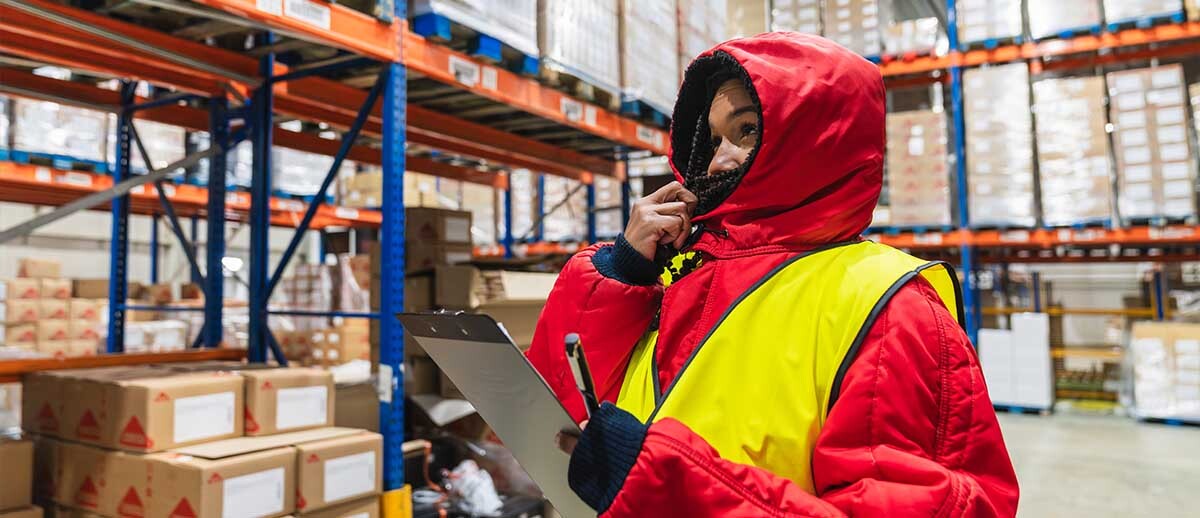
Protect Your Data with Zebra Science
In the cold chain, the cost of a label is pennies, but the cost of a failure is catastrophic. By matching your specific temperature profile with Zebra’s purpose-built materials, you eliminate the risk of "mystery inventory" and ensure your WMS remains accurate from the freezer to the finish line.
The ZPS Store is your dedicated partner for the entire Zebra ecosystem. We don't just ship boxes; we help you navigate the complex chemistry of adhesives to ensure your warehouse stays organized, no matter how low the temperature drops.