
Zebra Barcode Ring Scanners: The Hands-Free Advantage
Posted by The ZPS Store on May 19th 2025

What Exactly is a Ring Scanner, and Why Should Businesses Consider this Technology?
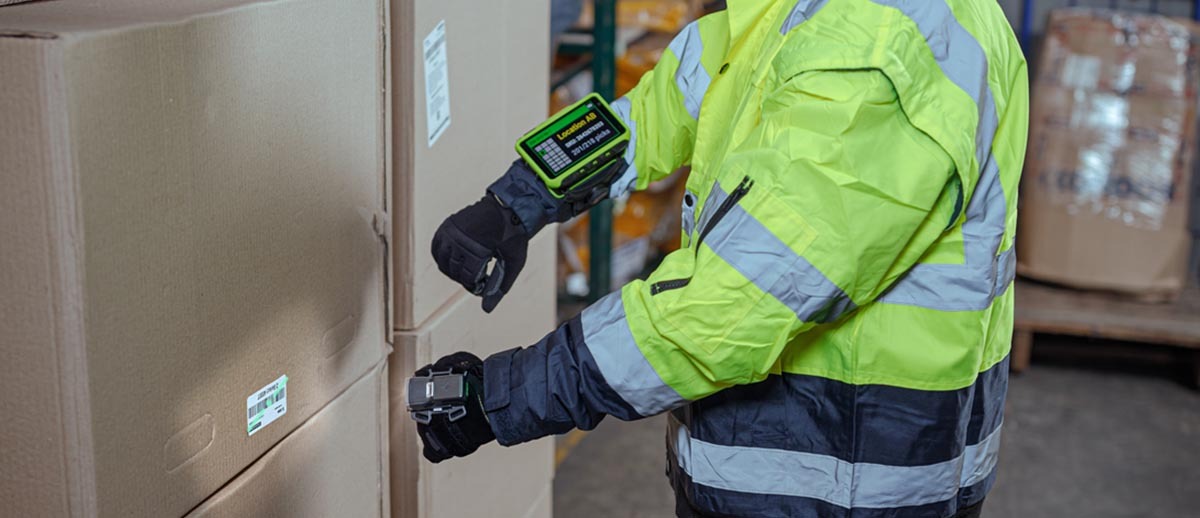
A ring scanner is a compact, wearable barcode scanning device worn on a worker's finger, enabling hands-free scanning while performing other tasks. Its primary value lies in allowing workers to manage materials or pick orders without the interruption of handling a separate scanner, leading to a more ergonomic and efficient data capture method.
Businesses with scan-intensive workflows should consider ring scanners for their ability to enhance worker performance and address operational bottlenecks. In environments like warehouses, distribution centers, and retail, the ability to maintain focus on items while scanning is transformative. Key benefits include:
-
- Enhanced Productivity: Accelerates workflows by allowing simultaneous item handling and scanning.
- Improved Ergonomics: Lightweight design reduces physical strain compared to heavier handhelds.
- Increased Accuracy: Minimizes manual data entry and reduces scan errors.
- Streamlined Operations: Particularly beneficial for order picking, packing, and inventory management.
- Enhanced Productivity: Accelerates workflows by allowing simultaneous item handling and scanning.
Ring scanners facilitate concurrent tasking, integrating scanning as a reflexive action rather than a separate step. This "effortlessly keep their focus on the items they're handling" approach, combined with the cumulative impact of saving "a few seconds per scan operation," leads to significant operational efficiency gains, especially in high-volume settings.

What are the Primary Advantages of Using a Ring Scanner Compared to a Traditional Handheld Scanner in a Business Environment?
Ring scanners offer several compelling advantages over traditional handhelds, primarily stemming from their wearable, hands-free design:
-
- Hands-Free Operation: Workers can use both hands for tasks like picking, packing, or assembly while maintaining immediate scanning access, unlike handhelds that require one hand for operation. This allows workers to "handle items more efficiently without having to constantly pick up and put down a handheld scanner".
- Increased Productivity: Eliminating the repetitive actions of handling a traditional scanner saves time, accumulating into substantial productivity gains over a shift. Ring scanners can "boost the productivity of your workforce".
- Improved Ergonomics: Lightweight and ergonomic, they minimize muscle strain and fatigue associated with bulkier handhelds, which "can be cumbersome and lead to repetitive strain injuries".
- Reduced Errors: Better focus on tasks due to hands-free operation can lead to fewer errors in picking or inventory processes, "eliminating manual data entry and reducing the risk of misreads or missed scans".
- Enhanced Safety: Using both hands can improve balance and grip, especially when handling bulky items or navigating hazardous areas.
Streamlined Workflows: Scanning becomes a fluid extension of movement rather than a disruptive step.
The ergonomic benefits can also lead to long-term health improvements and cost savings by preventing repetitive strain injuries. The intuitive "point-and-shoot simplicity" can also mean quicker training and adoption.
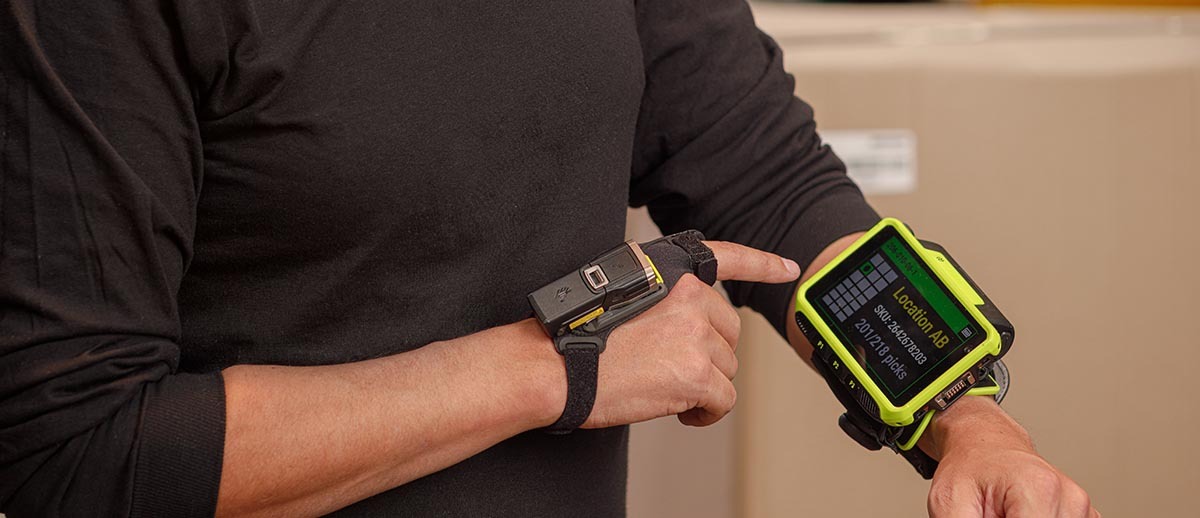
How Do Zebra Ring Scanners Connect to Other Devices? Are They Wireless or Cabled?
Zebra ring scanners offer versatile connectivity. Most modern models like the RS6100 and RS5100 primarily use Bluetooth for wireless communication, offering "freedom from cords" and often featuring NFC "tap to pair" for easy setup with compatible Zebra host devices. Some support Bluetooth Class 1 for extended range (up to 300 feet) and include a "Wi-Fi Friendly Mode" to prevent WLAN interference.
The RS4000 is a cabled ring scanner, connecting directly to Zebra wearable mobile computers like the WT6000 series, drawing power from the host and eliminating scanner battery management.
A hybrid connectivity option exists for the RS6100 and RS5100 via an optional corded adapter, allowing these Bluetooth scanners to operate in a corded, battery-free mode when needed. This provides flexibility for operations that may not always prefer "the flexibility and/or comfort of Bluetooth cordless operation" or wish to avoid "the added complexity of managing scanner batteries".

What Types of Barcodes Can the Zebra Ring Scanner Portfolio Read?
Zebra ring scanners are designed for comprehensive data capture, reading a wide array of both 1D linear barcodes and 2D matrix codes.
-
- 1D Barcodes: All common 1D symbologies are supported, including Code 39, Code 128, UPC/EAN, Interleaved 2 of 5, and GS1 DataBar. The RS4000 is a dedicated 1D laser scanner.
- 2D Barcodes: Advanced imagers in the RS6100 and RS5100 read numerous 2D symbologies like PDF417, DataMatrix, QR Code, and Aztec.
- Optical Character Recognition (OCR): Certain models like the RS5100 and RS6100 support OCR-A and OCR-B fonts.
- Digimarc: PRZM Intelligent Imaging technology in scanners like the RS6100 and RS5100 can capture Digimarc digital watermarks.
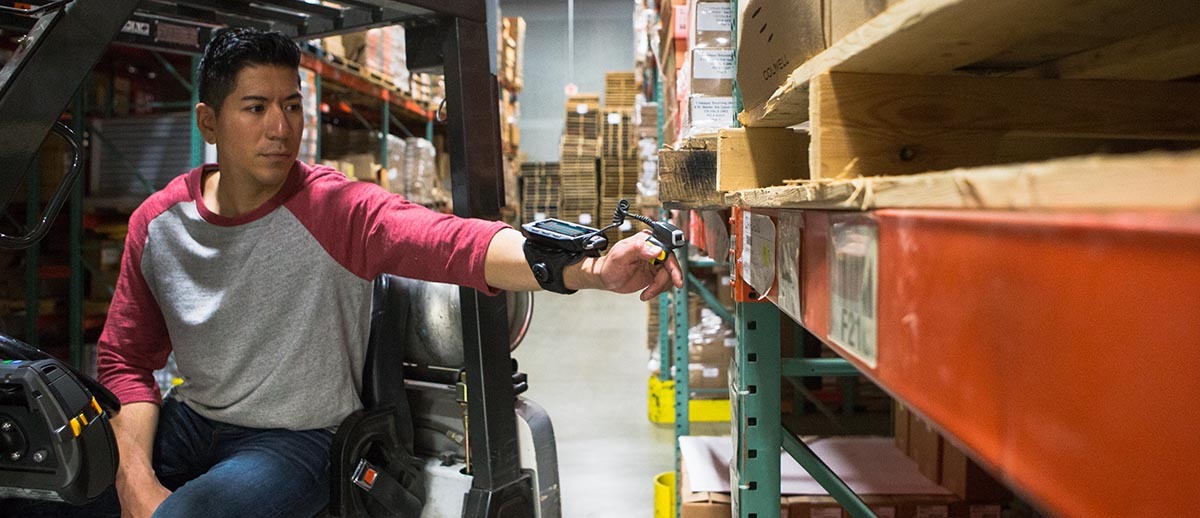
How Far Away, or Close, Can a Zebra Ring Scanner Read Barcodes?
Scanning distance varies by model, scan engine, and barcode characteristics (symbology, size, quality).
Zebra RS6100 Ring Scanner: Equipped with the SE55 1D/2D Advanced Range scan engine and IntelliFocus™ technology, it scans from 2 inches (5.08 cm) up to 40 feet (12.2 meters), "more than twice the scanning range of the RS6000". For example, a 100 mil Code 39 barcode can be scanned from up to 554 inches (1407.2 cm).
Zebra RS5100 Rng Scanner: Offers SE4710 and SE4770 scan engines.The SE4710 scans a 100% UPCA barcode from ~1.8 to 26.0 inches (4.6 to 66.0 cm) and a 20 mil Code 39 up to ~30.0 inches (76.2 cm).
Note: The SE4770 scans a 20 mil Code 39 up to 36.1 inches (91.7 cm) and a 100% UPCA from 1.6 to 24.9 inches (4.1 to 63.2 cm). It also has a "wider field of view" for easier capture of larger barcodes.
Zebra RS4000 Ring Scanner: This 1D laser scanner with Adaptive Scanning captures barcodes from "near contact to 15 ft./4.5 m".
Generally, smaller mil barcodes have shorter ranges. Technologies like IntelliFocus™ and Adaptive Scanning intelligently adjust focus for reliable capture at various distances.
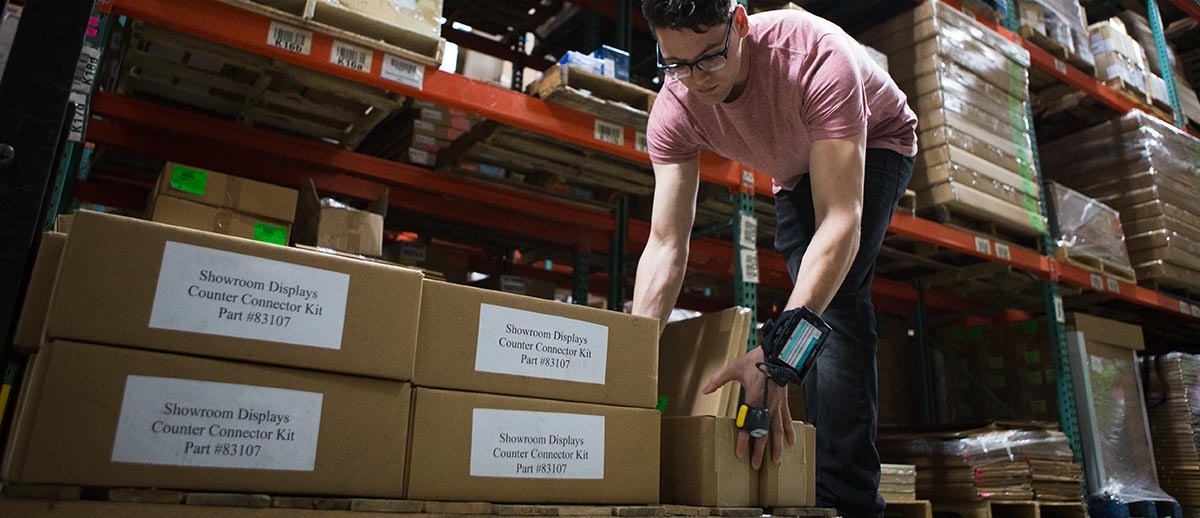
How Durable are Zebra Ring Scanners for Demanding Industrial Environments?
Zebra ring scanners are built for durability, with ruggedness tiered across the portfolio. Key aspects include drop/tumble specifications, IP ratings (dust/water ingress), and operating temperature ranges.
Zebra RS6100: Premier rugged model with IP65 sealing, multiple 6 ft (1.8m) drops to concrete across its operating temperature range, 1,000 tumbles (0.5m), and operates from -22°F to +122°F (-30°C to +50°C), suitable for freezers.
Zebra RS5100: "Best-in-class rugged design" with IP65 sealing, multiple 6 ft (1.8m) drops, 1,000 tumbles (0.5m). Operates from 32°F to 122°F (0°C to 50°C), or -4°F to 122°F (-20°C to 50°C) with an extended battery (cooler use). Features a trigger rated for millions of presses and durable metal buckles.
Zebra RS4000: "Business durable" with IP54 sealing, multiple 4 ft (1.2m) drops to concrete, and operates from -22°F to +122°F (-30°C to 50°C) (freezer suitable). Features a patented Liquid Polymer Scan Element with a lifetime warranty.
The tiered durability allows selection based on environmental harshness and budget. Freezer-capabilities are key for cold chain logistics. Attention to component longevity (triggers, scan elements) contributes to lower Total Cost of Ownership (TCO).

What are some of Zebra's Key Scanning Technologies (like PRZM™, IntelliFocus™, Adaptive Scanning) and How Do They Benefit the User?
Zebra integrates proprietary technologies to enhance scanning performance:
PRZM™ Intelligent Imaging: Found in RS6100 and RS5100 2D imagers, PRZM combines intelligent hardware, software, and optics, offloading decoding to an ASIC.
User Benefits: Faster, first-time capture of 1D/2D barcodes, even in poor condition (scratched, dirty, shrink-wrapped); extended reach; lower power consumption (up to 56% more scans per cycle ); future-proofing for various data types like Digimarc and OCR.
IntelliFocus™ Technology: Used in extended-range engines like the SE55 in the RS6100.
User Benefits: Versatile scanning range (e.g., RS6100: 2 inches to 40 feet ); improved safety and productivity by reducing need for climbing; ease of use with visible aiming systems; captures challenging barcodes across distances.
Adaptive Scanning Technology: Highlighted for the RS4000 1D laser scanner.
User Benefits: Wide working range for 1D barcodes (near contact to 15 feet ); increased productivity due to range versatility.
These technologies often work synergistically (e.g., IntelliFocus with PRZM ) and are tailored to device tiers and intended uses.
A Closer Look at the Zebra Ring Scanner Lineup
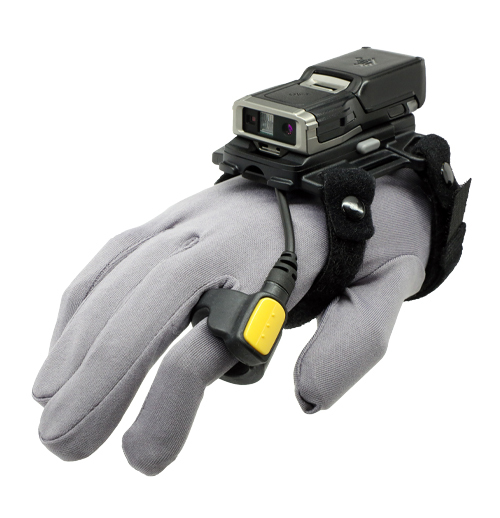
The Zebra RS6100: Maximum Power and Versatility
The Zebra RS6100 is Zebra's flagship Bluetooth wearable scanner, about half the size and weight of the RS6000, offering maximum power and versatility for demanding environments.
Key Features:
Advanced Scanning Range: SE55 1D/2D Advanced Range scan engine with IntelliFocus™ captures barcodes from 2 inches to 40 feet, even if damaged, using PRZM Intelligent Imaging and a high-resolution sensor.
Versatile Connectivity: Bluetooth 5.2 LE, NFC tap-to-pair, optional corded adapter for battery-free operation.
Exceptional Durability: IP65 sealing, 6-foot drops, 1,000 tumbles, triple-tested across its -22°F to +122°F (-30°C to +50°C) operating range (freezer capable).
Ergonomic Wearing Styles: Five interchangeable options (single finger with various triggers, Enterprise Hand Mount, Back of Hand Mount, lanyard).
Continuous Operation Battery System: Swappable PowerPrecision+ batteries (standard/extended).
Field Serviceability: Field-replaceable trigger assemblies; shares triggers, mounts, and batteries with RS5100.
Size and Weight: "Small and practically weightless," estimated around 3-3.5 ounces.
The RS6100 excels in demanding applications due to its range, durability, and versatility:
- Warehouse Management: Order picking/putaway (scanning high racks from forklifts), inventory management, receiving/loading docks in diverse conditions.
- Manufacturing: WIP tracking, quality control, parts replenishment.
- Transportation and Logistics (T&L): Sortation, proof of delivery/pickup, route accounting.
- Cold Chain Logistics: Freezer capability (down to -30°C) for temperature-sensitive goods.
- Retail (Back of Store/Large Format): Inventory cycle counts, click-and-collect fulfillment.
Its features allow it to consolidate device needs, and its "always in service" design (hot-swappable batteries, corded option ) maximizes uptime. Shared accessories with the RS5100 offer cost benefits.
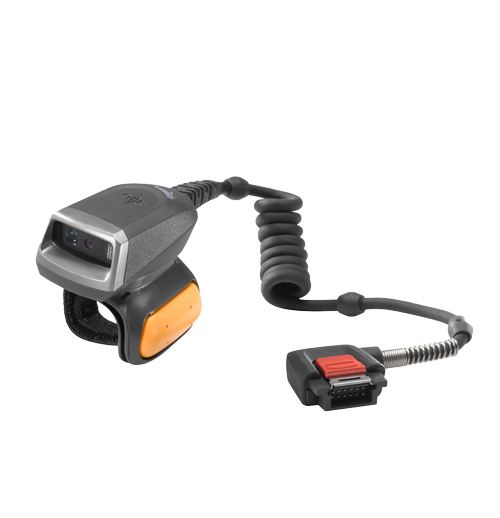
The Zebra RS5100: Featherweight Comfort and Rugged Performance
The Zebra RS5100 is a single-finger Bluetooth ring scanner known for its featherweight comfort (just over 2oz/70g) and rugged, enterprise-grade performance, ideal for hands-free mobility in industrial and customer-facing settings.
Key Characteristics:
Lightweight Design: Minimizes hand fatigue during long, high-volume scan shifts.
High-Performance Scanning: Choice of SE4710 (LED aimer) or SE4770 (laser cross-hair, improved range/motion tolerance) 1D/2D imagers with PRZM Intelligent Imaging and a wide field of view.
Versatile Connectivity: Bluetooth (some Class 1 up to 300ft ), NFC tap-to-pair, optional corded adapter for battery-free use.
Robust Durability: IP65 sealing, 6-foot drops, 1,000 tumbles, trigger rated for millions of presses, durable metal buckles.
Multiple Ergonomic Wearing Styles: Five options (single finger with various triggers, Enterprise Hand Mount, back-of-hand, lanyard).
Advanced Battery System: Swappable PowerPrecision+ batteries (standard 480mAh for ~12hrs/14,400 scans; extended 735mAh for longer shifts/cold use down to -4°F/-20°C).
Field Serviceability: User-replaceable battery and trigger assembly.
Comprehensive Symbology Support: Wide 1D/2D range, OCR-A/B.
The RS5100 is ideal for scan-intensive applications where minimizing fatigue and maximizing mobility are key:
- Warehousing/Distribution: High-volume order picking, packing, sorting; receiving/putaway; inventory management.
- Manufacturing: Assembly line operations, parts tracking, quality control.
- Retail: Stock room management, click-and-collect, some customer-facing roles due to its modern design.
- Transportation and Logistics (T&L): Package handling and sortation.
- Field Service: Convenient hands-free scanning for mobile workers.
Its "featherweight comfort" suits high-volume roles, and its "modern design" is less obtrusive in customer-facing areas. Easily replaceable components reduce TCO.
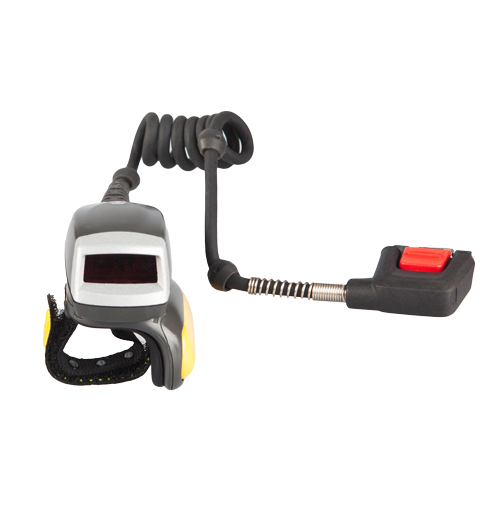
The Zebra RS4000: The Reliable Corded Solution
The Zebra RS4000 is a compact, durable corded 1D ring scanner (~2.0oz/56.7g) designed for Zebra's WT6000/WT6300 wearable mobile computers, offering a hands-free solution for 1D barcode-intensive tasks.
Strengths:
Specialized 1D Laser Scanning: Optimized for traditional 1D barcodes.
Corded Operation: Draws power from host, eliminating scanner battery management.
Adaptive Scanning Technology: Patented tech provides a wide 1D scan range (near contact to 15 feet/4.5m).
Robust Durability: Diecast zinc scan engine chassis, patented Liquid Polymer Scan Element (lifetime warranty), IP54 sealing, 4-foot drops, cable wear beads.
Ergonomic Design: Swivel feature for L/R hand use, bright scan line, oversized LED indicator.
Hygienic Design: Separate, replaceable finger strap assembly.
Performance on Challenging Barcodes: Reads scratched, dirty, or poorly printed 1D barcodes.
Cold Storage Capability: Operates from -22°F to 122°F (-30°C to 50°C).
Cost-Effectiveness: Generally more cost-effective for 1D needs than 1D/2D wireless models.
The RS4000 is ideal for hands-free 1D applications where a corded connection is advantageous:
- Warehouse Operations: Order picking/putaway, receiving, inventory management in 1D-dominant facilities.
- Manufacturing: Assembly line tasks, material handling with 1D barcodes.
- Logistics/Distribution: Sorting packages with 1D shipping labels.
- Freezer Operation: Suitable for cold storage down to -30°C.
- Specific Scenarios: Part of Zebra multi-modal solutions (e.g., with WT6000/WT6300), existing RS4000 users, or when corded operation is preferred to avoid scanner battery management.
Its 1D focus and corded design offer reliable performance and lower TCO for specific niches. The lifetime warranty on its Liquid Polymer Scan Element is a key durability feature.
What are the Key Takeaways a Company Should Consider if They are Thinking About Investing in Zebra Ring Scanners?
Investing in Zebra ring scanners requires evaluating several factors:
- Nature of Scanning Tasks:1D vs. 2D Barcodes: RS4000 for 1D-only needs ; RS5100/RS6100 for 1D/2D.
- Scan Range: RS5100 for close-proximity ; RS6100 for extended ranges (up to 40ft ); RS4000 for 1D up to 15ft.
- Barcode Condition: All Zebra models, especially with PRZM, handle damaged/dirty barcodes well.
- Work Environment:Durability: RS5100/RS6100 for harshest conditions (IP65, 6ft drop ); RS4000 for "business durable" needs (IP54, 4ft drop ).
Temperature: RS6100/RS4000 for freezers (-30°C ); RS5100 for coolers (-20°C with extended battery ). - Connectivity & IT:Corded vs. Wireless: RS4000 (or RS5100/RS6100 with adapter) for corded simplicity ; RS5100/RS6100 for Bluetooth mobility (requires battery management ).
Host Device Compatibility: Ensure compatibility with existing/planned devices; NFC tap-to-pair on RS5100/RS6100 simplifies deployment with Zebra hosts. - Ergonomics & User Acceptance:Wearing Styles: RS5100/RS6100 offer multiple options for comfort ; RS4000 has L/R swivel.
- Weight: RS5100 is featherlight (~2.5oz ); RS6100 also significantly lighter than predecessor.
- Total Cost of Ownership (TCO):Balance upfront cost with long-term value (durability, field-replaceable parts like RS5100/RS6100 batteries/triggers, RS4000 lifetime scan element warranty). Factor in battery management for wireless models. Quantify productivity gains from time savings and error reduction.
- Future-Proofing: Consider future needs (e.g., 2D migration, OCR) when selecting a model.
- Software Ecosystem: Leverage Zebra tools like Scanner SDK, DataWedge, and VisibilityIQ.
Consider the "cost of doing nothing" and conduct pilot programs for user feedback. Maximize value by integrating scanners into the broader Zebra enterprise mobility ecosystem.

What is the Overall Value Proposition of Integrating Zebra Ring Scanners into a Company's Workflow?
The core value of Zebra ring scanners is the enhancement of operational efficiency and worker productivity through hands-free, ergonomic, and accurate data capture.
Key Advantages Include:
- Increased Throughput: Faster task completion by allowing simultaneous material handling and scanning.
- Improved Accuracy: Minimized manual entry and reduced scan errors enhance data integrity.
- Enhanced Worker Well-being: Ergonomic designs reduce physical strain and improve morale.
- Streamlined Workflows: Scanning becomes an intuitive part of the work process.
- Real-time Data Visibility: Timely data capture enables better decision-making.
- Adaptability: Rugged designs perform reliably in diverse and demanding environments, including cold storage.
A well-chosen Zebra ring scanner (RS6100, RS5100, or RS4000), tailored to specific needs, yields significant ROI through labor savings, error reduction, and an empowered workforce. This investment optimizes core workflows and improves data quality flowing into backend systems, leading to better business intelligence.
Talk to an Expert