
Zebra MC3400 Vs. Competitors: In-Depth Analysis of the Latest Zebra Handheld
Posted by The ZPS Store on Jun 4th 2025
In the fast-paced worlds of warehousing, retail, manufacturing, and logistics, the efficiency and reliability of your mobile technology can make or break your success. Zebra Technologies, a long-standing leader in enterprise-grade mobile computing, has raised the bar yet again with the introduction of its Zebra MC3400 and Zebra MC3450 mobile computers. This new series isn't just an incremental update; it's a significant leap forward, building upon the legacy of the highly successful MC3300 and MC3200 series. This article explores the key advancements of the Zebra MC3400 series, its standing against competitors, and why upgrading might be a strategic imperative for your business.
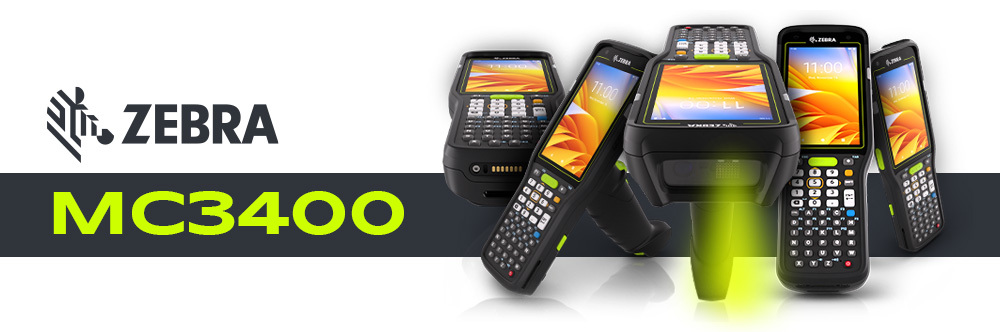
Stepping Up the Game: MC3400 Series vs. MC3300 Series – The True Differences
While the Zebra MC3300 series set a high standard by transitioning the popular MC3000 family to the Android operating system and offering versatile form factors, the Zebra MC3400 series significantly enhances this foundation. Here’s what truly sets them apart:
- Dramatically Increased Processing Power: The MC3400 series boasts a new, high-speed Qualcomm 4490 octa-core processor (2.4 GHz). This delivers approximately 2.5 times the processing power compared to the Snapdragon 660 found in the MC3300x/MC3300ax models. This translates to snappier application performance, smoother multitasking, and the ability to handle demanding modern applications and workflows with ease.
- Enhanced Memory and Storage Options: Supporting the upgraded processor, the MC3400 series offers configurations with up to 6GB of RAM and 128GB of Flash storage, a substantial increase from the MC3300's typical 4GB RAM and 32GB Flash. This means more capacity for applications, data, and a longer useful device lifespan.
- Next-Generation Connectivity:Wi-Fi 6E: A standout feature, Wi-Fi 6E provides significantly more bandwidth, faster speeds (up to 3x), and access to more spectrum than Wi-Fi 5. This leads to more reliable connections, reduced network congestion, and better performance in dense RF environments – crucial for modern, connected operations.
- 5G Cellular (Zebra MC3450): The Zebra MC3450 variant introduces 5G cellular capability, a significant differentiator in this mid-range rugged device segment. This allows for seamless connectivity both inside and outside the four walls, catering to applications in yards, ports, and field services where Wi-Fi may be unavailable or impractical. This includes support for private 5G networks.
- Bluetooth 5.3: Offers improved range, speed, and security for connecting to peripherals like scanners, printers, and headsets.
- Superior Ruggedness: Zebra has further hardened the MC3000 series design. The MC3400 boasts an impressive 8-foot drop-to-concrete specification (up from 6 feet for the MC3300x) and dual IP65 and IP67 sealing. This means it's dust-tight and can withstand water jets and temporary submersion, making it even more resilient in harsh industrial environments, including outdoor use and washdown scenarios. Some sources even cite a 10-foot drop spec and IP68 for certain configurations.
- Advanced Scanning Capabilities: While the MC3300 offered strong scanning, the MC3400 series introduces options like the SE58 Extended Range scan engine with IntelliFocus™. This engine can capture barcodes from near contact to over 100 feet (approximately 30.5 meters) away, a significant increase from the MC3300’s ~70-foot maximum. The innovative green laser aimer is also up to seven times more visible than traditional red aimers, improving aiming accuracy, especially at extended ranges.
- Enhanced Imaging: All Zebra MC3400 and Zebra MC3450 models now come standard with both a front-facing 5MP camera and a rear-facing 13MP camera. The MC3300 had an optional rear camera on select models and no front-facing camera. This addition supports video calls for collaboration, image capture for proof of condition, and potentially biometric facial recognition for secure login (like Zebra's Identity Guardian).
- Improved Ergonomics and User Experience: Zebra has paid attention to usability. The MC3400 features keypads with keys that are about 12% larger and have more spacing, reducing errors and fatigue, especially for gloved hands.
- Extended Android OS Lifecycle Support: The MC3400 series launches with Android (typically Android 11 or newer as per recent trends) and is guaranteed support through future Android versions, with some sources indicating support up to Android 18. This ensures a longer device lifecycle with access to critical security patches and platform updates, future-proofing the investment.
Stacking Up: The Zebra MC3400 Series vs. The Competition
The mid-range rugged mobile computer market features strong contenders from manufacturers like Honeywell and Datalogic.
Against the Honeywell CK65 & CK67
- Strengths of MC3400: The Zebra MC3400, particularly the MC3450, often leads with cutting-edge connectivity like Wi-Fi 6E and 5G cellular, which competitors like the Honeywell CK65 (Wi-Fi 5) may lack or are only beginning to introduce in newer iterations like the CK67. The MC3400's processing power with the Qualcomm 4490 is also a strong point. Zebra’s extensive Mobility DNA suite provides robust software tools. The extended Android OS support on the MC3400 series is also a significant advantage for future-proofing.
- Weaknesses/Areas of Parity: Honeywell devices like the CK65/CK67 are known for their ruggedness (often matching or closely competing on drop and tumble specs) and also feature long lifecycle support through their Mobility Edge™ platform. Honeywell also offers strong scanning performance with options like FlexRange™. Accessory compatibility within the Honeywell family is also a consideration. The choice can come down to specific feature preferences (e.g., keypad layout, specific scan engine needs) and ecosystem integration.
Against the Datalogic Skorpio X5
- Strengths of MC3400: The Zebra MC3400 generally offers a more powerful processor, more advanced Wi-Fi (Wi-Fi 6E vs. Wi-Fi 5 on the Skorpio X5), and the option for 5G with the MC3450. Zebra’s extended Android support and broader software ecosystem are also key advantages. The MC3400's top-tier scanning range (up to 100ft) often surpasses competitors in similar classes.
- Weaknesses/Areas of Parity: Datalogic's Skorpio X5 is a robust device with good scanning capabilities and its own set of ergonomic and software features. It's a strong contender, especially if an organization already has Datalogic devices. However, in terms of future-proofing with the latest connectivity and OS support, the MC3400 series often has an edge.
Pricing Perspectives
Direct price comparisons are challenging as they vary based on configuration, volume, and support contracts. However, generally:
- The Zebra MC3400 series is positioned as a premium mid-range device. Its advanced features (Wi-Fi 6E, 5G option, powerful processor, enhanced ruggedness) justify its price point, which is typically competitive within its feature class.
- List prices for a base Zebra MC3400 can start around $1,500 - $1,800 and increase with more advanced scan engines, memory, and features.
- Competitors like the Honeywell CK65/CK67 and Datalogic Skorpio X5 often fall within a similar price bracket, depending on the specific configuration. The CK65 base models might sometimes be found at a slightly lower entry price, but higher-end configurations become comparable. It's crucial for businesses to look beyond the upfront hardware cost and consider the Total Cost of Ownership (TCO), which includes deployment, management, support, and the longevity provided by features like extended Android support.

The Upgrade Question: Moving from MC3300s or MC3200s
Should you upgrade?
From MC3200 (Windows CE/older Android):
Absolutely. The MC3200 is a legacy device. Upgrading to the Zebra MC3400 offers a modern Android OS (critical for security and application compatibility), vastly superior processing power, better connectivity, enhanced ruggedness, and significantly improved scanning. The productivity gains and risk mitigation from moving off an unsupported OS are substantial.
From MC3300:
This is a more nuanced decision. If your MC3300s are meeting current needs and are still under support, an immediate fleet-wide upgrade might not be urgent. However, there are compelling reasons:
- Performance Demands: If current applications are sluggish or you plan to deploy more demanding software.
- Connectivity Needs: If you're upgrading your wireless infrastructure to Wi-Fi 6/6E or require cellular connectivity for outdoor/yard operations (MC3450).
- Extended Range Scanning: If your operations involve scanning at distances beyond the MC3300's capabilities (e.g., high racking in warehouses).
- Future-Proofing: To leverage longer OS and security support, ensuring devices remain viable for many years.
- Increased Ruggedness: If device damage rates are a concern, the MC3400's improved durability can reduce TCO.
- New Workflows: The dual cameras open possibilities for new applications like video support and better image documentation.
Is it okay not to upgrade for the time being (from MC3300)?
Possibly, if...
Your current MC3300 devices perform adequately for your existing applications.
You don't have immediate plans for Wi-Fi 6E or 5G deployment.
Your scanning range requirements are well within the MC3300's capabilities.
Budget constraints are a primary factor, and the MC3300s are still supported.
However, it’s wise to start planning and budgeting for an eventual upgrade to stay current with technology and security.
Compatibility Corner: Accessories and Batteries
- Accessory Backwards Compatibility: Yes, Zebra has prioritized a smooth transition. The Zebra MC3400 series is largely backwards compatible with existing Zebra MC3300 charging cradles and other key accessories. This is a significant cost-saving factor for businesses upgrading their fleet. Compatibility with MC3200 accessories is less likely due to form factor and technology differences.
- Battery Compatibility: The Zebra MC3400 uses new high-capacity 7000mAh PowerPrecision+ batteries (some with BLE beacon for device tracking). Crucially, these MC3400 batteries are compatible with MC3300 and MC3300ax models. Furthermore, MC3400 devices can also use legacy MC3300 batteries, although Zebra notes that using older batteries in the MC3400 might result in reduced ingress protection (IP) sealing. MC3200 batteries are different and not compatible.
Built to Last: Durability and Lifecycle
- Rugged and Durable: Unquestionably, yes. The Zebra MC3400 series is designed as a Zebra Rugged Handheld. With its 8-foot (or even 10-foot for some specs) drop rating to concrete, IP65/IP67 (or IP68) sealing, and Corning Gorilla Glass on the display, it’s built to withstand the rigors of demanding industrial environments, including tumbles, drops, dust, and water exposure. MIL-STD-810H compliance is often cited.
- Expected Lifecycle: Under most circumstances, a Zebra MC3400 unit is expected to have a long operational life. Zebra typically offers support for its enterprise devices for many years. With LifeGuard™ for Android, which provides security and OS updates, customers can expect support for up to 10 years from the product's first sale date (including extended service options). The physical durability also contributes to a longer usable life compared to consumer-grade devices.
Getting the Best Deal: Special Pricing
Yes, special pricing options are indeed available for the Zebra MC3400 series. Businesses can often secure:
- Corporate Discounts: For large enterprises.
- Volume Discounts: When purchasing a significant number of units.
- Project Pricing: Tailored pricing for specific project rollouts.
As the user mentioned, these favorable terms can often be accessed through leading Zebra hardware suppliers like The ZPS Store, who specialize in Zebra solutions and can assist with navigating these pricing structures and Zebra's trade-in programs (like Go Zebra Trade-In Program) for additional savings when upgrading from older devices.

Where the Work Gets Done: Common Industries and Applications
The versatile and robust Zebra MC3400 series is deployed across a multitude of industries, including:
- Warehousing & Distribution: This is a core market.Applications: Picking and packing, put-away, shipping and receiving, cross-docking, inventory management, cycle counting, yard management (especially MC3450). The extended scan range is invaluable for high-bay racking.
- Retail: Back-of-store inventory management, price verification/markdowns, click-and-collect/BOPIS order fulfillment, receiving, shelf replenishment, mobile point of sale (MPOS).
- Manufacturing: Work-in-process (WIP) tracking, component tracking, quality assurance, inventory control on the production line, asset tracking, maintenance and repair operations.
- Transportation & Logistics (T&L): Proof of delivery/pickup (with MC3450's cellular capabilities), sortation, loading/unloading, asset tracking in yards and ports, route optimization support.
- Field Service (MC3450): Mobile work order management, asset tracking, parts inventory, service automation, data capture in outdoor environments.
The combination of its Zebra Handheld design, powerful Zebra Scanner capabilities, rugged build, and advanced connectivity makes the Zebra MC3400 and Zebra MC3450 indispensable tools for improving productivity, accuracy, and operational visibility across these demanding sectors.
The Zebra MC3400 series represents a significant evolution in mid-range rugged mobile computing. Its enhanced power, connectivity, durability, and scanning capabilities make it a compelling option for new deployments and a worthwhile upgrade for businesses looking to modernize their mobile workflows and future-proof their operations.
Talk to an Expert