
Zebra Printer Buyer's Guide: When to Choose ZT231 over ZT411
Posted by The ZPS Store on Feb 9th 2026
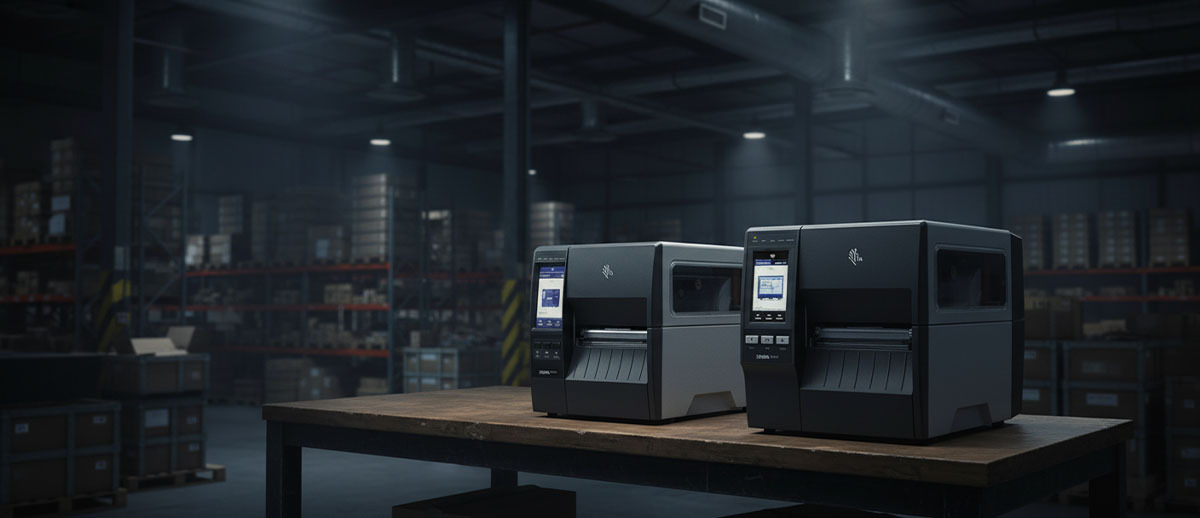
Choosing an industrial Zebra barcode printer is a bit like choosing a vehicle for a logistics fleet. You wouldn't buy a heavy-duty semi-truck to deliver small parcels in a residential neighborhood, nor would you expect a standard cargo van to haul forty tons of freight across the country. In the world of Zebra thermal printers, the ZT231 and the ZT411 represent these two distinct philosophies.
The Zebra ZT231 is the sleek, value-tier industrial workhorse, while the Zebra ZT411 is the high-performance professional backbone. For many businesses, the price gap between the two is just large enough to cause hesitation. Is the ZT411’s "Pro" status merely marketing, or does the hardware under the hood justify the jump in capital expenditure? To answer that, we need to look past the spec sheet and get into the mechanical reality of these machines.
Under the Hood: Durability and Structural Integrity
The most immediate difference between these two models lies in their physical construction. While both boast metal frames and metal enclosures, the ZT411 is fundamentally built for more intensive abuse. The ZT411 features an all-metal construction, including the internal gear assemblies and a heavy-duty frame designed for high-impact environments. This rigidity is critical in environments where the printer is running twenty-four hours a day. High-speed printing creates significant vibration and heat; a fully metal chassis dissipates that heat more effectively and maintains precise alignment of the printhead and platen roller over millions of inches of media.
In contrast, the Zebra ZT231 is optimized for light industrial environments. While it still uses metal enclosures, it incorporates high-impact plastic for non-structural elements like the bi-fold door’s large clear window. This makes the ZT231 significantly lighter and more compact—a major advantage for space-constrained packing stations. However, it isn't designed to live on a high-vibration manufacturing floor or endure constant forklift bumps. If your printer sits in a climate-controlled shipping office, the ZT231’s construction is more than sufficient. But if it’s destined for a dusty, high-traffic distribution center, the Zebra ZT411’s armored interior is a form of insurance.
Interface and Intelligence: The Touchscreen Evolution
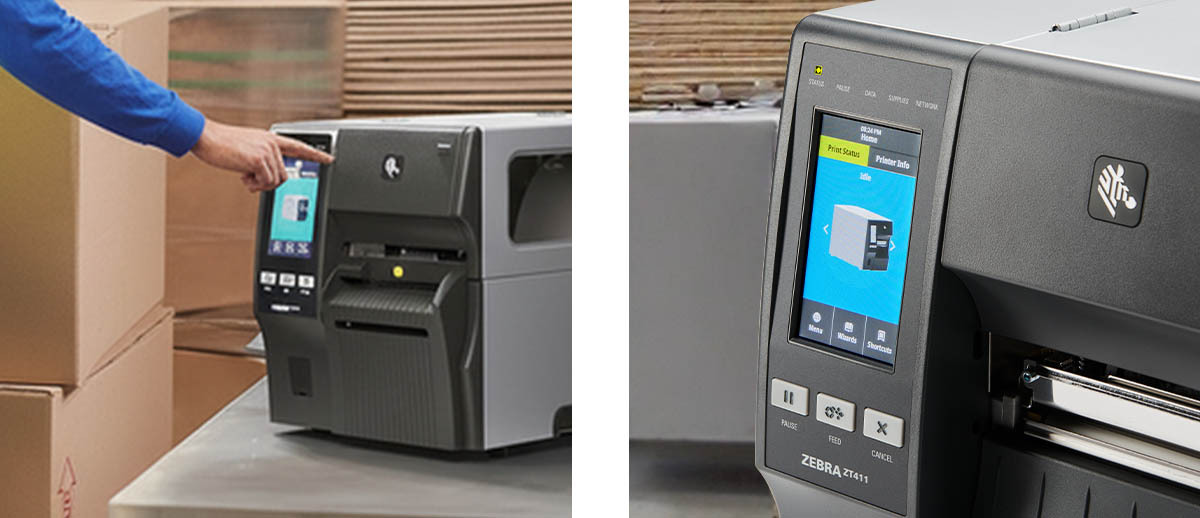
Both printers have moved away from the archaic button-and-light interfaces of the past, but the ZT411 takes the user experience a step further. It features a 4.3-inch full-color touch display that offers more than just menu navigation. It provides color-coded alerts—turning red when there’s an error or yellow when the ribbon is low—allowing operators to diagnose issues from across the room.
The ZT231 also features a 4.3-inch color touch screen, which is a massive upgrade over its predecessor, the ZT230. However, the processing power behind the ZT411's screen allows for more complex on-board troubleshooting videos and a more responsive interface. For a large fleet, the ability to walk up to a printer and see exactly why it stopped without needing to consult a manual is a massive boost to uptime.
The Scalability Factor: Resolution and RFID Capabilities
One of the strongest arguments for the ZT411 is its modularity and high-resolution options. Business needs change; you might start with standard shipping labels today and need RFID encoding or high-density micro-labeling next year.
The ZT411 is a "forever" chassis. It offers three resolution options: 203, 300, and 600 DPI. The 600 DPI capability is exclusive to the ZT411 and is mandatory for printing micro-text on electronics or tiny pharmaceutical labels. Furthermore, while the ZT231 supports standard RFID, the ZT411 is the only model in this class that can handle Silverline on-metal RFID tags. These tags are significantly thicker, and the ZT411's specialized sensors and adjustable printhead pressure are required to encode them accurately.
Media Handling: The Rewinder Reality
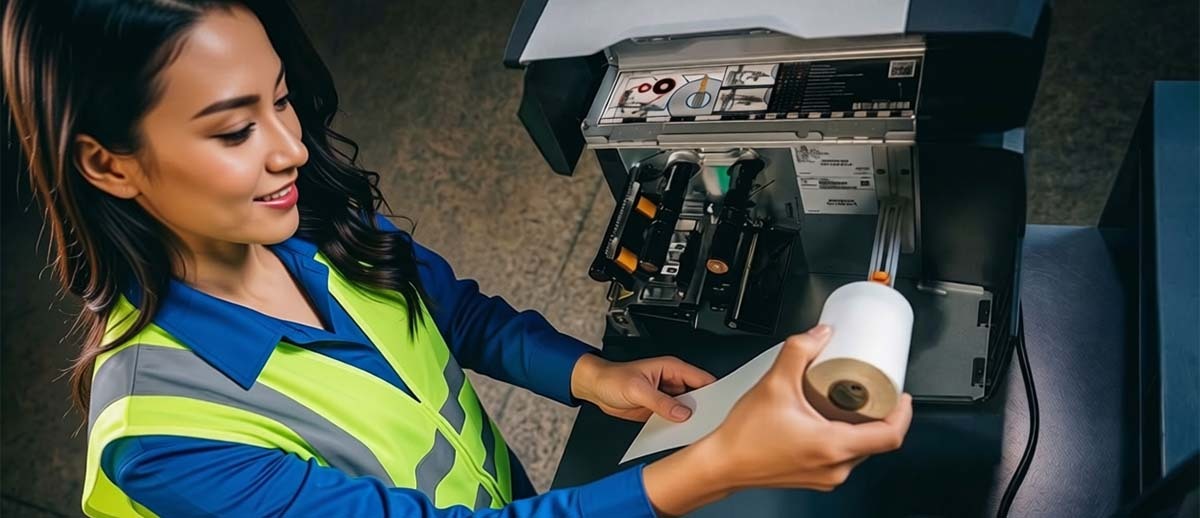
A critical technical distinction lies in how these machines handle finished labels. The ZT411 can be equipped with an internal full-roll rewinder, which allows the printer to take up a complete roll of printed labels back onto a 3-inch core. This is a factory-installed option and is essential for high-batch applications where labels are printed in bulk to be used elsewhere.
While the ZT231 is field-upgradable with basic accessories like a cutter or a passive peeler, it does not support a full internal rewinder. It is strictly designed for "tear-off" mode or basic "peel-and-present" workflows. If your operation requires the machine to act as a rewinder for large batches, the ZT411 is your only viable path.
Scenarios: When the Wrong Printer Costs You Money
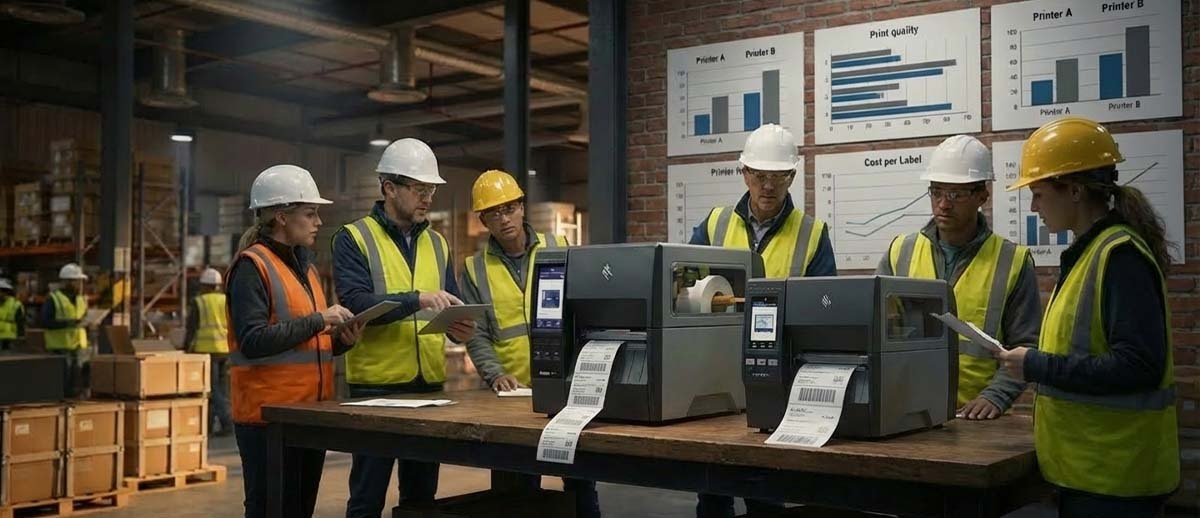
Choosing the wrong tool for the job doesn't just result in a "slower" printer; it results in a higher Total Cost of Ownership (TCO). Let’s look at two common mistakes.
- Scenario A: The Compliance Crisis (Needs ZT411, using ZT231) A boutique laboratory is using a ZT231 to print 300 DPI labels for specimen vials. New government regulations require 40% more warning text and a dense DataMatrix code in the same tiny space. At 300 DPI, the text becomes a blurred mess, and the scanner fails to read the compact code. The lab is forced to scrap their fleet of ZT231s and invest in ZT411s solely for the 600 DPI high-resolution capability required for micro-text legibility. By under-buying initially, they paid for two fleets of printers instead of one.
- Scenario B: The Under-Utilized Workhorse (Needs ZT231, using ZT411) A regional furniture warehouse buys five ZT411 RFID models because they want the "best" technology available. Three years later, they are still only printing standard 4x6 thermal transfer shipping labels in a clean office environment. They never used the RFID encoders, the 600 DPI resolution, or the all-metal internal gears. They spent an extra $1,200 per unit for features they will never touch. A fleet of ZT231s would have saved them $6,000—capital that could have been used to upgrade their handheld scanners or mobile computers.
5 Questions to Determine Your Correct Printer Model
To avoid the scenarios above, ask these five questions before you pull the trigger on a purchase:
- What is the smallest thing we print?
If you need micro-text under 4-point font or high-density graphics, you need the 600 DPI resolution of the ZT411. - How many shifts is the printer running?
The ZT411 is rated for "24/7/365" duty cycles. If you are printing 5,000+ labels a day or running three shifts, the ZT411 is a requirement. - Does our environment involve "Forklift Traffic" or "Washdowns"?
Rugged environments with high vibration or heavy dust demand the ZT411’s fully metal internal components. - Are we printing 500 labels at a time, or 5,000?
If you need to rewind a full roll of labels back into the machine for later use, you must order a ZT411 with a factory-installed rewinder. - Will we need to track assets on metal surfaces?
If your future includes Silverline on-metal RFID tagging, the ZT231 won't be able to handle the specialized media thickness.
Is the Upgrade Worth It?
The "Pro" upgrade of the Zebra ZT411 is worth every penny if your operation depends on high-volume, mission-critical printing or specialized technologies like 600 DPI and on-metal RFID. Its superior durability and scalability make it the gold-standard backbone for heavy industrial environments. However, Zebra has done a masterful job with the Zebra ZT231, providing a premium experience and metal enclosures for businesses that need industrial reliability without the "ultra-industrial" price tag. By accurately assessing your throughput and environment, you can ensure you aren't just buying a printer, but the right partner for your supply chain.