
FSMA 204 Compliance: A Zebra Roadmap for Food Traceability
Posted by The ZPS Store on Mar 23rd 2026
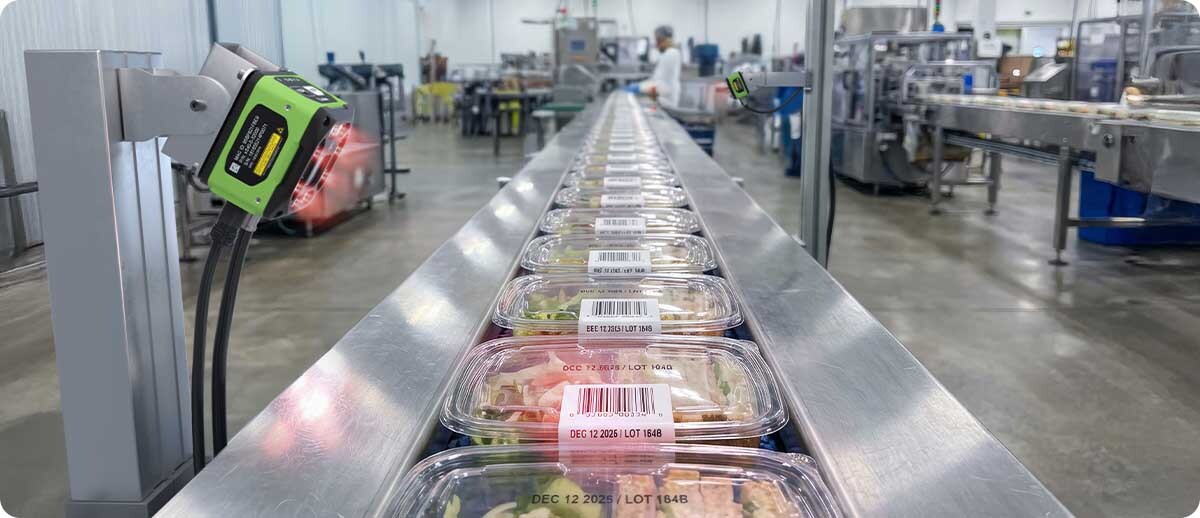
By The ZPS Store | Food Safety | FSMA 204 Compliance Guide
When a foodborne illness outbreak hits, the FDA's current investigation timeline averages 5–6 weeks to trace a contaminated product back through the supply chain. FSMA Section 204 — the Food Traceability Final Rule — is designed to compress that window to 5–6 days. The mechanism for doing that is rigorous, standardized data capture at every stage of a food's journey from farm to table.
For food manufacturers, processors, packers, distributors, and retailers handling foods on the FDA's Food Traceability List (FTL), compliance means building systems capable of capturing, storing, and producing specific data records on demand — within 24 hours of an FDA request.
The good news: Zebra Technologies has built a comprehensive hardware and software ecosystem purpose-designed for food traceability data capture. From barcode and RFID label printing at the point of origin to mobile scanning and verification throughout the supply chain, Zebra's tools map directly onto FSMA 204's core requirements. And The ZPS Store carries the full lineup, ready to ship.
This guide explains what FSMA 204 actually requires, what happens at each Critical Tracking Event, and which specific Zebra products address each compliance need.
What FSMA 204 Actually Requires: CTEs, KDEs, and TLCs Explained
FSMA 204 is built around three core concepts. Understanding them is the starting point for any compliance strategy:
Critical Tracking Events (CTEs)
CTEs are the specific moments in a food's supply chain journey where enhanced recordkeeping is required. For FTL foods, the defined CTEs are:
- Harvesting — the point at which raw agricultural commodities are collected from the growing environment
- Cooling — the first cooling of a raw agricultural commodity after harvest
- Initial Packing — the first time a raw agricultural commodity is packaged for commercial distribution
- First Land-Based Receiving — when seafood from a fishing vessel is first received at a land facility
- Transformation — when a food is commingled, repackaged, relabeled, or changed in a way that creates a new food
- Creation — when a food on the FTL is produced from ingredients not on the FTL
- Receiving — when an FTL food is received from another entity in the supply chain
- Shipping — when an FTL food is shipped to another entity in the supply chain
Key Data Elements (KDEs)
KDEs are the specific data points that must be captured and recorded at each CTE. They vary by event type but generally include product descriptions, Traceability Lot Codes, quantities, unit measures, dates and times, location descriptions, and supply chain partner identifiers. All KDE records must be maintained in a sortable electronic format and retrievable within 24 hours of an FDA request.
Traceability Lot Codes (TLCs)
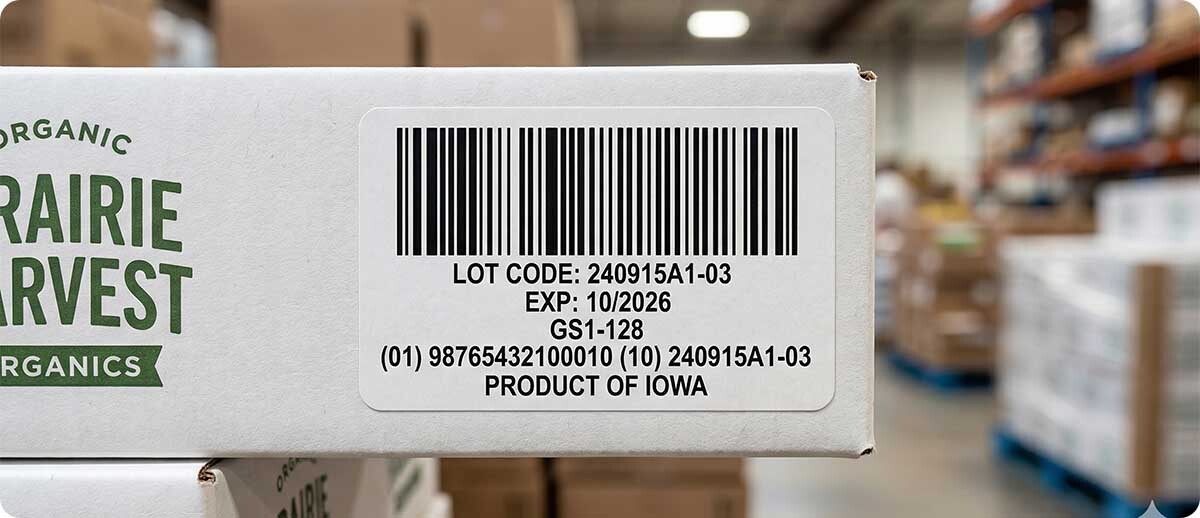
A TLC is a unique alphanumeric identifier — think of it as a barcode-scannable serial number for a batch of food — that links all KDE records across every CTE. TLCs must be assigned at initial packing, transformation, or creation events, and must travel with the food (on the label, in the electronic record, or both) through every subsequent CTE. The FDA recommends using a GS1 GTIN plus lot code structure as the TLC to enable interoperability across the supply chain. This is where Zebra's printing and scanning hardware becomes mission-critical: every TLC printed must be accurate, readable, and durable enough to survive the supply chain environment it's entering.
What Foods Are on the FDA Food Traceability List?
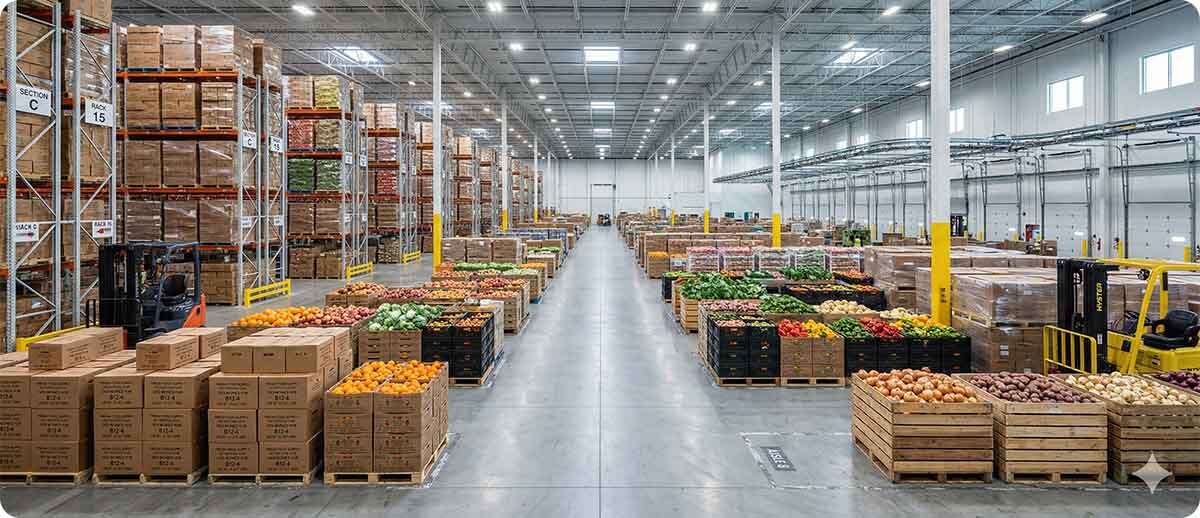
The FTL covers foods identified as higher risk based on foodborne illness history and outbreak frequency. If your operation touches any of these categories, FSMA 204 applies to you:
| Category | Examples |
|---|---|
| Fresh Produce | Leafy greens, tomatoes, peppers, cucumbers, herbs, melons, sprouts, tropical tree fruits |
| Fresh-Cut Produce | Pre-cut fruits and vegetables, salad mixes, ready-to-eat fresh produce items |
| Shell Eggs | Shell eggs not processed for commercial sterility |
| Nut Butters | Peanut butter, almond butter, and similar nut and seed paste products |
| Cheeses (ready-to-eat) | Soft and semi-soft cheeses not requiring further cooking before consumption |
| Seafood | Finfish, crustaceans, mollusks — both fresh and smoked |
| Ready-to-Eat Deli Salads | Deli salads such as coleslaw, potato salad, pasta salad with meat/seafood/poultry |
The rule applies to domestic operations and foreign suppliers shipping any of these foods to U.S. consumers, covering the entire farm-to-table supply chain.
The Zebra FSMA 204 Compliance Roadmap
FSMA 204 compliance is fundamentally a data capture and label printing challenge. Every CTE requires a label printed with an accurate, scannable TLC. Every receiving and shipping event requires that TLC to be scanned and linked to KDE records. Every transformation event requires a new TLC to be generated and printed. Zebra's hardware ecosystem addresses each of these requirements with purpose-built tools. Here is how the Zebra product line maps to each layer of the compliance stack:
Layer 1: Printing the Traceability Lot Code Label
The TLC label is the physical anchor of your entire FSMA 204 compliance chain. If it's unreadable, smudged, or falls off the package, your traceability record breaks. Zebra's thermal print technology — both direct thermal and thermal transfer — produces consistently readable barcodes (GS1-128, QR, Data Matrix, GS1 DataBar) at the throughput and durability levels food environments demand.
Best for High-Volume Production and Distribution: Zebra ZT411 RFID Industrial Printer
The ZT411 is the workhorse RFID label printer for food processing and distribution environments. It prints and encodes RFID labels in a single pass, eliminating the need for separate print-and-encode steps. For FSMA 204 operations that need both a human-readable barcode TLC and an RFID-encoded tag on the same label — increasingly a requirement as major retailers roll out RFID mandates — the ZT411 handles both simultaneously.
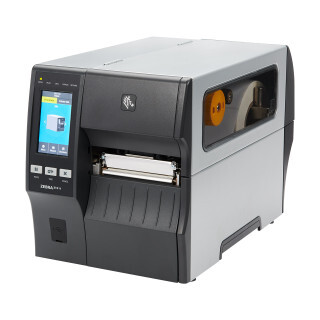
Zebra ZT411 RFID Industrial Printer
Part #: ZT41142-T0100A0Z
Industrial thermal transfer RFID label printer purpose-built for high-volume production and distribution environments. Prints and encodes RFID labels in one pass. 4-inch print width, 203 dpi standard (300 dpi available). Intuitive 4.3-inch color touchscreen. Link-OS for remote management via Zebra's Printer Profile Manager Enterprise. Field-installable RFID encoder. Ideal for applying GS1-compliant TLC labels at initial packing, transformation, and shipping CTEs at production line speeds.
Shop the ZT411 RFID →Best for Mid-Volume and Mixed-Use Environments: Zebra ZD621 RFID Desktop Printer
Not every TLC printing station needs an industrial printer. Receiving docks, packing stations, and quality control checkpoints that generate moderate label volumes are well-served by the ZD621 RFID — Zebra's most capable desktop RFID printer. It delivers the same Link-OS management capabilities as the ZT411 in a compact desktop form factor, making it ideal for distributed FSMA 204 labeling points throughout a food facility.
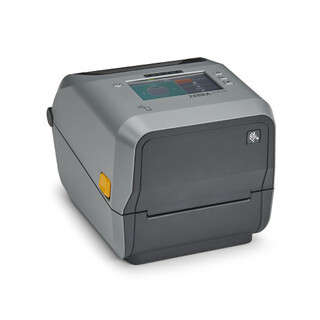
Zebra ZD621 RFID Desktop Printer (203 dpi, USB/LAN/Bluetooth)
Part #: ZD6A143-311FR1EZ
Compact RFID desktop printer with direct thermal and thermal transfer capability. Prints and encodes UHF RFID labels for FSMA 204 TLC applications. 4-inch print width, 203 dpi. USB, Ethernet, Bluetooth, and Wi-Fi connectivity. Intuitive color LCD display. Link-OS enabled for remote profile and configuration management. Perfect for receiving dock TLC label printing, transformation event relabeling, and distributed compliance labeling stations across a food facility.
Shop the ZD621 RFID →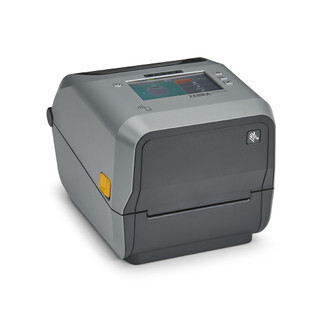
Zebra ZD621 RFID Desktop Printer (300 dpi, USB/LAN/Wi-Fi/Bluetooth)
Part #: ZD6A142-321FR1EZ
High-resolution 300 dpi variant of the ZD621 RFID for operations requiring finer print quality on small TLC labels. Same full connectivity and Link-OS management as the 203 dpi model. Ideal where label real estate is tight and barcode density requires sharper resolution to maintain GS1 readability compliance.
Shop the ZD621 RFID 300dpi →Best for Large-Format and High-Speed Industrial RFID Printing: Zebra ZT610 / ZT620 RFID
For large food processing facilities, distribution centers, and operations applying TLC labels to cases, pallets, and large-format packaging, the ZT600 Series RFID printers deliver the throughput, durability, and connectivity to keep up with production line demands. The ZT610 and ZT620 feature a factory- or field-installable RFID encoder, a large color touchscreen, and full Link-OS management for centralized control across multi-printer fleets.

Zebra ZT610 / ZT620 RFID Industrial Printers
ZT600 Series — Multiple configurations available
Industrial RFID printers combining rugged durability, user-friendly operation, and future-proof adaptability for the most demanding food production and distribution environments. Print widths of 4" (ZT610) and 6" (ZT620). Factory- or field-installable RFID encoder. 4.3-inch color touchscreen. Full Link-OS management. Designed for continuous, high-volume TLC label printing at packing lines, distribution sortation, and shipping dock applications where compliance labeling must keep pace with operational throughput.
Shop the ZT610 RFID →Layer 2: The FSMA 204 Label Media — What You Print On Matters
Printing an accurate TLC barcode is only half the equation. The label substrate must survive the environment the food moves through — refrigeration, moisture, freezing, condensation, rough handling, and outdoor exposure. A TLC barcode that peels off in a refrigerated truck or smears in a wet produce environment creates a compliance gap just as serious as not printing it at all.
Standard RFID Traceability Label: Zebra Z-Perform 1500T RFID Label
The Z-Perform 1500T is Zebra's standard thermal transfer RFID label — the go-to media for general food supply chain traceability applications. It delivers excellent barcode print quality, reliable RFID encoding performance, and compatibility across the full Zebra RFID printer lineup. Available in the two most common TLC label sizes for food supply chain use.
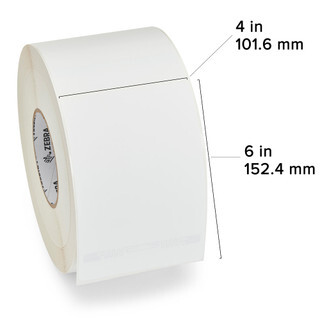
Zebra Z-Perform 1500T RFID Label — 4" x 6" (Case)
Part #: 10026634
Standard 4" x 6" thermal transfer RFID label — the most common case and pallet label format for FSMA 204 TLC applications. Compatible with ZT411R, ZT610R, ZT620R, ZT421R, ZD621R, and ZD500R RFID printers. Excellent print quality for GS1-128 and GS1 DataBar barcodes required for food traceability compliance.
Shop the 4" x 6" RFID Label →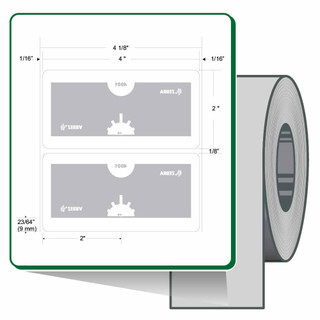
Zebra Z-Perform 1500T RFID Label — 4" x 2" (Case)
Part #: 10035242
Standard 4" x 2" thermal transfer RFID label for item-level TLC applications on smaller food packages, produce containers, and individual product units. Same Z-Perform 1500T performance and printer compatibility in a smaller footprint for tight label placement requirements.
Shop the 4" x 2" RFID Label →For a full selection of Zebra RFID label media in additional sizes, materials, and adhesive types suited for food traceability applications — including freezer-grade and moisture-resistant variants — visit The ZPS Store's complete Zebra RFID Label catalog.
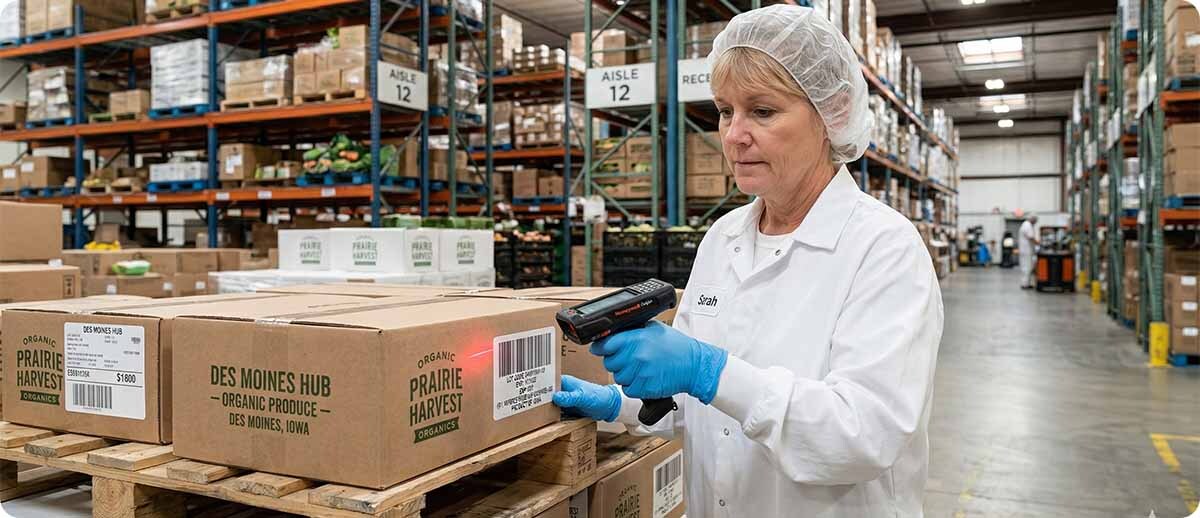
Layer 3: Scanning and Verifying TLCs at Every CTE
Every receiving and shipping CTE under FSMA 204 requires that the incoming or outgoing food's TLC be captured and linked to KDE records. That means someone in your operation — at the dock, on the floor, or in the cooler — needs to scan that barcode or read that RFID tag and connect the data to your traceability system. Zebra's mobile computing lineup handles this layer of the compliance stack.
Best for RFID-Enabled Food Traceability Scanning: Zebra MC3300 RFID Mobile Computer
The Zebra MC3300 RFID is a purpose-built RFID handheld that combines barcode scanning and RFID reading in a single rugged device. For food operations where both barcode TLC labels and RFID-encoded tags are in use — or where you're building toward RFID compliance alongside FSMA 204 — the MC3300 RFID eliminates the need for separate scanning devices. It runs Android with Zebra's Mobility DNA platform for simplified deployment, management, and integration with traceability software systems.
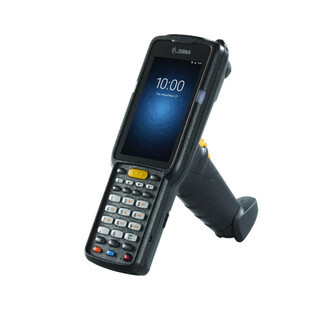
Zebra MC3300 RFID Mobile Computer
Part #: MC333U-GJ3EG4US
Rugged Android RFID handheld combining integrated barcode scanning and UHF RFID reading for food supply chain traceability workflows. Captures TLCs from both GS1-128 barcodes and RFID tags in a single device. Zebra Mobility DNA platform for enterprise device management, DataWedge for seamless integration with traceability software, and LifeGuard for Android for extended OS support. Built for warehouse, distribution, and food processing environments requiring durable, all-day performance.
Shop the MC3300 RFID →Best General-Purpose Traceability Scanner: Zebra TC57 Touch Computer
For food operations that need a versatile mobile computer capable of scanning TLC barcodes, accessing traceability software, capturing photos for receiving documentation, and supporting team communications — all in a single device — the Zebra TC57 is the right platform. It reads every GS1 barcode symbology used in food supply chain traceability, runs all major traceability and WMS applications, and is rugged enough for the drops, moisture, and temperature swings common in food handling environments.
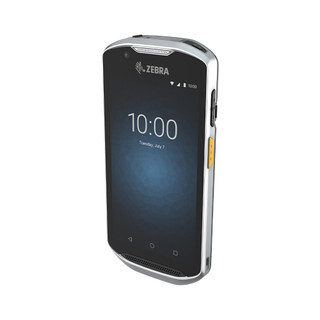
Zebra TC57 Touch Computer
Part #: TC57HO-1XFMU6P-NA
Enterprise-class Android touch computer for food traceability data capture, traceability software access, and supply chain communications. SE4770 2D imager reads all GS1 barcode symbologies including GS1-128, QR, Data Matrix, and GS1 DataBar required for FSMA 204 TLC capture. 6-foot drop rated. IP67 sealed against dust and liquid. Zebra Mobility DNA for enterprise management. Optional RFID sled for operations requiring both barcode and RFID capability.
Shop the TC57 →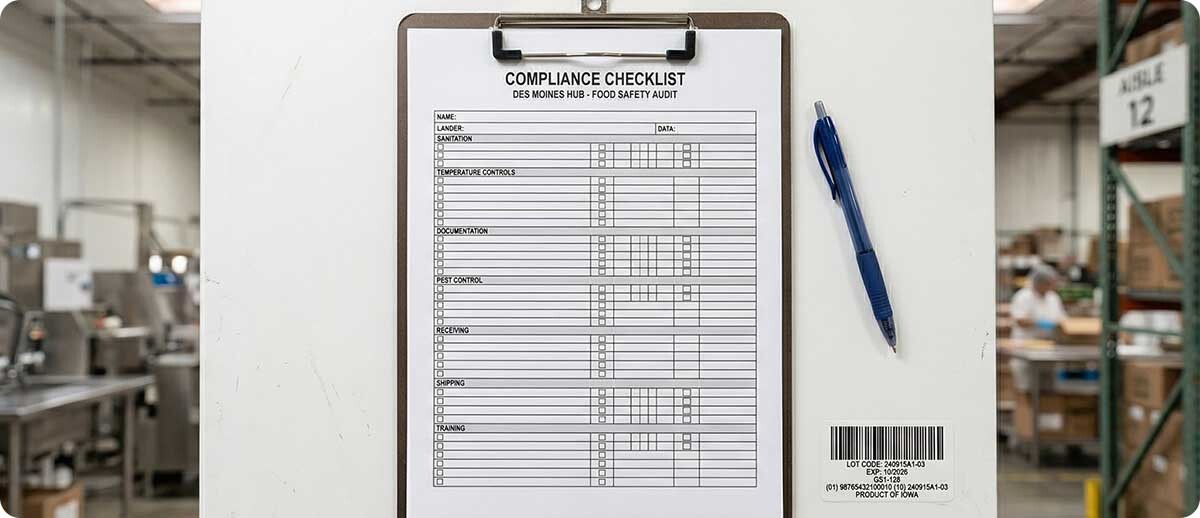
FSMA 204 Compliance Readiness: A Self-Assessment Checklist
Use this checklist to assess where your operation stands today against FSMA 204's core hardware and process requirements:
| Requirement | Status |
|---|---|
| Identified all FTL foods handled in your operation | ☐ Complete |
| Mapped all CTEs that occur in your supply chain role | ☐ Complete |
| Defined KDE data fields required at each CTE | ☐ Complete |
| TLC format defined (GS1 GTIN + lot code recommended) | ☐ Complete |
| Label printer(s) capable of printing GS1-compliant TLC barcodes at each labeling CTE | ☐ Complete |
| Label media selected for durability in your specific food environment (refrigerated, frozen, wet, outdoor) | ☐ Complete |
| Mobile computers or scanners at each receiving and shipping CTE capable of reading TLC barcodes | ☐ Complete |
| Electronic recordkeeping system for KDE storage in sortable, retrievable format | ☐ Complete |
| Records retention policy of 2 years minimum established | ☐ Complete |
| 24-hour FDA record retrieval capability confirmed | ☐ Complete |
| Written traceability plan documented with designated point of contact | ☐ Complete |
| Supply chain partners aligned on TLC format and KDE data exchange | ☐ Complete |
Frequently Asked Questions: FSMA 204 and Zebra Technology
What is the current FSMA 204 compliance deadline?
The FDA extended the compliance deadline by 30 months. The new deadline is July 20, 2028. The extension was solidified when Congress passed appropriations language in November 2025 barring FDA from enforcing the rule prior to July 20, 2028, and the FDA has stated it will not enforce the Food Traceability Rule prior to that date. However, the rule's requirements are completely unchanged — only the enforcement date shifted. Companies that use the extended window to build proper systems now will avoid a last-minute scramble.
Does FSMA 204 require RFID, or is barcode sufficient?
The FSMA 204 rule does not mandate any specific technology. It requires that TLCs and KDE data be captured and maintained — barcodes, QR codes, RFID tags, or even paper records are all technically compliant. However, the FDA strongly encourages electronic systems, and major retail buyers (Walmart, Target, Kroger) are separately driving RFID requirements at the case and pallet level. For operations serving large retail customers, building a combined barcode + RFID labeling infrastructure now satisfies both FSMA 204 and retailer requirements in one investment.
What barcode symbologies does FSMA 204 recommend for TLC labels?
The FDA and GS1 US recommend GS1-128 linear barcodes or GS1 DataMatrix 2D codes for encoding GTIN + lot code TLC data. QR codes structured with GS1 Digital Link are an emerging option. All of these symbologies print natively on Zebra ZT411, ZD621, and ZT600 Series printers using standard ZPL label templates.
How long must FSMA 204 records be retained?
Records must be maintained for a minimum of two years from the date they were created and must be producible to the FDA in a sortable electronic format within 24 hours of a request.
Does FSMA 204 apply to our foreign suppliers?
Yes. The rule applies to both domestic operations and foreign firms producing FTL foods for U.S. consumption. If you import FTL foods from foreign suppliers, both you and your supplier are subject to the rule's requirements. This makes supply chain partner alignment on TLC format and KDE data exchange one of the more complex implementation challenges for importers.
Are there exemptions to FSMA 204?
Yes. Small food businesses meeting the FDA's very small business definition (under $1 million in average annual food sales), farms meeting certain thresholds, and certain non-profit food distribution operations may qualify for exemptions or modified requirements. Review the FDA's Food Traceability Rule exemptions section and consult with your regulatory counsel to determine your specific status.
Can existing Zebra printers be upgraded for RFID encoding?
Many Zebra industrial printers — including several ZT400 and ZT600 Series models — support field-installable RFID encoders, meaning you can upgrade a barcode-only printer to RFID capability without replacing the entire unit. Contact The ZPS Store for a compatibility assessment of your current Zebra printer fleet before committing to new hardware purchases.